
Blog
The 7 Best Air Conditioners of 2026


Top pick
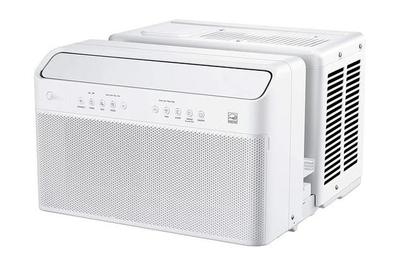
This U-shaped air conditioner is the quietest and most efficient model we’ve ever tested. But the installation process isn’t fun—and can even cause some problems if you don’t do it right.
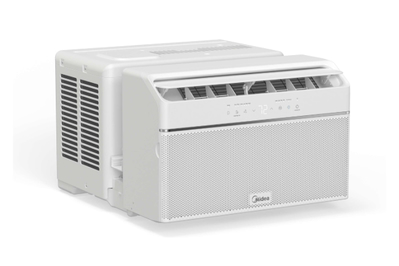
A newer version of our long-running top pick, the Plus has improved efficiency and some minor feature upgrades. A redesigned bracket also improves the installation process (slightly).
There are plenty of products out there that promise to “reinvent” their category — but the U-shaped Midea U MAW08V1QWT is the rare one that actually delivers. We were skeptical when it first arrived in the spring of 2020, but it quickly won us over with its impressively quiet and energy-efficient performance. After living with the same 8,000 Btu unit for several summers, we can say with confidence that it is genuinely the best window air conditioner we’ve tested — and we stand by that even after the company issued a recall to address mold concerns. In 2025, the company also released a slightly upgraded version, the Midea U Plus MAW08U1QWT, which offers a few small improvements but otherwise works just as well. Both the standard Midea U and the Midea U Plus are available in a variety of sizes; we think you should get whichever model is available in the size you want when you need it. Regardless of which one you end up with, just make sure the back is tilted downwards when you install it.
The Midea U is impressively powerful, without using a lot of energy. Unlike standard air conditioners, which typically only cycle on and off, the Midea U has an inverter compressor that runs at varying speeds. This means it can modulate its electrical consumption as needed, rarely running full throttle. While most non-inverter ACs have an energy efficiency ratio around 11 or 12, the Midea U is rated at an impressive 15.0. The U Plus takes it a step further: it’s the first air conditioner to achieve an EER of 16.0, making it the single most efficient window air conditioner currently available. That won’t necessarily translate to a huge amount of energy savings over the standard model, but either one will use about half as much energy as a non-inverter air conditioner that only hits the EPA’s minimum efficiency standards. In our tests, on hot days we’ve watched the energy usage on the Midea Ul fluctuate between 100 and 300 watts over the course of several hours, even though it’s rated to run at up to 710 watts. Once the room hits a target temperature, either version of the Midea U can maintain those conditions with very little energy.
It’s one of the absolute quietest ACs we’ve ever tested. One nice perk of the Midea’s U-shaped design is that all the louder hardware gets moved to the other side of the window. So while the inverter compressor already helps to temper the volume, the glass serves as an extra buffer to mute the sound even more. In our tests, it was actually difficult to get an accurate volume reading from the Midea U — it just blended in with the empty room tone, between 35 and 40 decibels. There was a slight high-pitched boost when the compressor was running on high, but even that was barely noticeable.
The Midea U’s unique design means that you can keep using your window, too. Most air conditioners require you to pull the window down against their tops to help keep them in place. But the Midea U boasts a curious U shape, with a “canyon” in the center that you pull the window down into, separating the fan on the inside from all the heavy hardware on the outside. It also has extendable side bars that lock it into place with the window frame — so you can open the window without worrying that the AC will fall out. It even has a pair of built-in locks to prevent anyone from trying to force the window open from the outside.
It’s reasonably priced as well even before you factor in the free bracket. The average cost for an 8,000 Btu Midea U is typically between $350 and $400. That’s about what you’d pay for a similarly sized AC with a standard compressor, and less than most other inverter-style units we’ve seen (even the ones without smart-home controls). And thanks to its unique design, the Midea U also comes with its own window bracket, which would otherwise cost you another $50 or so.
Flaws but not dealbreakers
Some users have complained that it attracts more mold. Grit, dust, and sometimes fungal spores can be a problem with any air conditioner. But it may be more difficult to deal with, or at least more noticeable, due to the Midea’s easy-to-see but hard-to-access front fan assembly. In summer 2025, the company issued a recall on its u-shaped air conditioners; by that point, there had been at least 152 complaints about the problem out of more than 1.7 million units sold, according to the Consumer Protection Services Commission.
To address the issue, Midea created a new DIY repair kit to help improve water drainage from the U-shaped air conditioners. The company also offered a prorated refund to customers as an alternative. This DIY repair kit is now included with all Midea U (and Midea U Plus) purchases, and comes with several drip plugs for the rear of the unit, plus a bubble level so you can make sure that both the AC and the bracket are properly tilted backwards. There’s also an improved set of instructions—with plenty of clear warnings about the potential for mold issues—to help walk you through the installation process.
Even after just one day of testing the DIY repair kit, we were amazed at the puddle that had formed beneath our air conditioner. We were also pleased to learn that we had already been keeping our unit at the correct tilt (which could be part of the reason why we were never able to replicate the mold problem in our earlier tests). We feel confident enough that these new changes will help to further reduce the risk of developing mold in these ACs.
Even with the company’s new fix in place, we still recommend running this AC on the “auto” setting, which makes the fan run every 10 minutes to aid with moisture evaporation; this is true even in humid locations that also attract algae and other growths. Alternatively, you can run the fan manually for a few hours after the AC has finished cooling the room, which should have the same effect. We also strongly discourage you from buying an oversized air conditioner, even if it seems to make financial sense.
The installation process can be annoying. This was an issue even before Midea added the bubble level guidance to help improve drainage. To be fair, installing any air conditioner in your window, quite frankly, sucks. But the Midea U’s quirky design makes the experience uniquely frustrating.
After installing at least a dozen Midea Us over the years, I’ve learned that it can actually be a lot easier than you think—you just have to treat this model as you would a normal AC. (In other words, don’t overthink it.)
Here are a few other installation tricks I’ve learned along the way:
- Place the bracket on the sill so it’s stable-ish, but don’t lock the legs right away. Set the AC on top of the bracket until you feel it settle snugly into place.
- Locate the extendable metal bars at the bottom of the AC “canyon.” Slide them into the window tracks. Use that as your anchor.
- Slide the window down to make sure it fits into the canyon.
- Lift the window back up, and then lock everything else into place.
- Using the included hardware, secure everything as necessary for your specific window. Then while you’re at it, slap some insulation padding everywhere you can.
- But seriously: please pay attention to the tilt angle. Put that bubble level to good use.
Otherwise, YouTube is always your friend.